About the breed
Muscovy ducks, briefly
Temperament
Muscovies are calm, watchful, and surprisingly personable. Raised with gentle handling from ducklings, they become trusting birds that follow their people around the yard. Drakes tend to be mellow and easygoing; hens are curious and independent.
Quiet by nature
This is the breed for people who can't (or shouldn't) have quacking. Muscovy ducks don't quack at all. Hens make a small, quiet trill, and both sexes communicate mostly with soft hisses and tail wags. Many owners keep them precisely because the neighbors barely notice them.
Foraging
Muscovies are outstanding foragers. They graze on grass and greens and eagerly hunt insects — flies, mosquito larvae, slugs, and other pests. Given pasture time, they supplement a large share of their own diet, which keeps them active and healthy.
Size & appearance
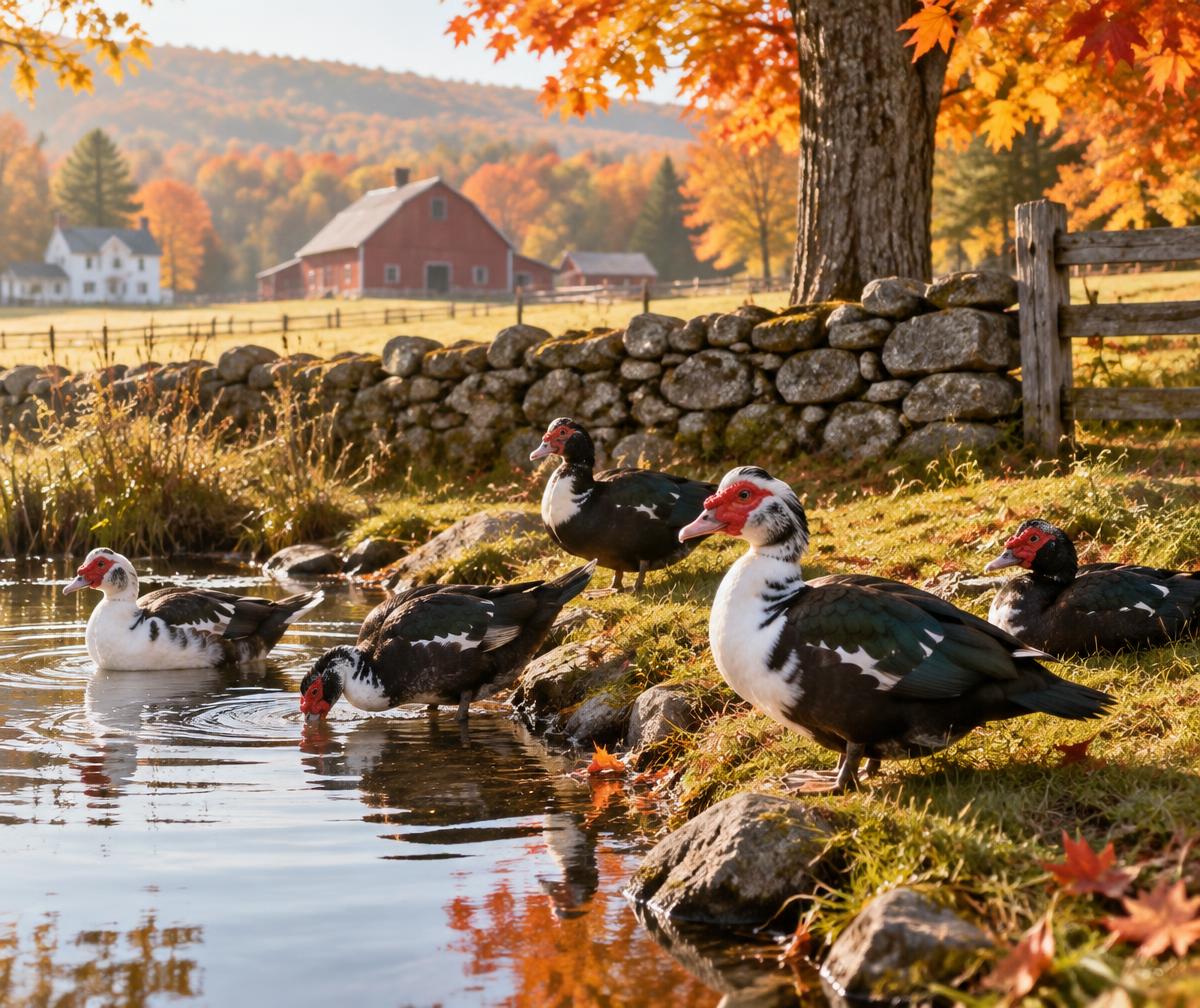
Muscovies are large, perching ducks with strong claws, a broad body, and distinctive red caruncles around the face. Adult drakes typically reach roughly 10–15 pounds; hens are notably smaller, around 5–7 pounds. Colors range widely — see our color guide for examples.
Care basics
Muscovies need fresh drinking water deep enough to clean their bills, secure nighttime housing, and protection from predators — they fly well and often prefer to roost up high. They're hardy in New England winters with a dry, draft-free shelter and don't require a pond, though they love one.
Know your local rules
Before bringing any ducks home, check your town and state rules. Regulations on keeping waterfowl — including Muscovy ducks — vary by municipality and state, and some places require permits or limit flock sizes. A quick call to your town office saves headaches later.
Thinking Muscovy might be right for you?
We're happy to talk through the breed, our setup, and what we usually have available — no pressure, just ducks.